Saturday, November 19, 2011

Traffic Stop...

Traffic stop in Bangalore (and I assume around India) is a pretty active place. Things which happen there are amazing.

  1. Folks take a break. Some even take their shoes/sandals off and take a stretch. Some very active junctions have a stop time close to 2 minutes.
  2. Pee-break - I don't need to explain what this is. It is pretty disgusting.
  3. Nose-digging - clean yourself up.
  4. Spit (and clear your throat). Disgusting, but we Indians are not really very conscious of our surroundings.
  5. Helmet-cleaning - if you are driving a two wheeler with a helmet on, it gets pretty hot inside (the helmet). So it is a time to cool-off and comb your hair.
  6. Vendors sell their wares -what better way to market to your customers. If you have shopped at a traffic junction, you know the margins on some of the items are incredibly high. Don't fall a prey, always bargain.
  7. Beggars knock on your windows (so tinted is better and you need to keep them rolled up). Beggars are OK if they are genuine, but irritating if you see them over and over again. If you have seen 'Slum Dog Millionaire' it shows an entire business built around begging.
  8. Count as the traffic display counts down to zero.
  9. Make that urgent phone call or answer that SMS.
  10. Wiggle around, vehicles wiggle around the traffic junction, so that they can be the first to be flagged out at the green. It always fascinates me on how people compete for space here - at the traffic junctions all rules are broken - you can go across into the other lane, wiggle from the left most lane to make a right turn etc.
  11. Stare around at your surrounding drivers and passengers.
  12. Ask for directions which is really common. Folks who ask about directions are usually a long long way off from their destination and the only legible answer you can give them in the couple of minutes is to politely ask them to turn right or left or head straight.
:-)

Wednesday, November 16, 2011

Promise of connected devices.

Needless to say, I'm a big fan of Kindle (and Amazon).

Kindle fills two very basic needs (at-least from my perspective).

  1. Get books when you need them, where-ever you are.
  2. Save valuable real-estate at home - you no longer need those big bulky book-shelves. I can carry 100's of books with me in a very nice form factor.
The key is "downloading where ever you are" (not everywhere on this planet, but in most parts). If someone had told be about this 10-15 years back, it would have sounded as science fiction, but not anymore.

Kindle is in essence a connected device which fulfills a single customer need (i.e download your book anywhere) over cellular network. Amazon has also built a profitable business model around it, which is also the key behind its success. I've articulated the advantages of Kindle and how it might catch on in the education space in one of my previous blog posts.

Bigger picture, one of the successes behind Kindle is the concept of connected devices. It opens up more and more opportunities in the future. Classic example is the smart refrigerator - Can I program my refrigerator to work in a auto-mode. Fill in the list of items I usually buy, set a threshold and when items fall behind the threshold, contact my favorite grocery store and order my items (charge my credit card). So, I really don't have to bother about what happens behind the scenes. Sci-fi ? Maybe not, the technology is available right now. The key is getting business model right i.e building a profitable business model where all the stake holders have an advantage.

There is another advantage with connected devices and that is it brings the customer and the producer nearer. Before Kindle, we used to buy books at a book-store - which served as a middle man in the transaction. With Kindle, I really don;t need a book store - I can talk with Amazon directly and in essence I'm closer to the producer (in this case, the author). I no longer have to visit multiple book stores to check out if they carry a book I need or it makes searching a lot easier etc etc.

If you look at the world around us, we see a lot of example where these connected devices would help us if there is a business model which helps everyone.

What triggered this post was this company (Vitality) which launched Connected Pill Bottle, so that your pill bottle can pre-order your tablets when you run out of them. Is this a business model that will work ? It is easy to laugh at them right now. Would I pay $15 for this service, hell no. But then the technology is cool, my guess is that these folks would branch off into related fields (built on the same underlying technology) - remote health monitoring maybe. 

More importantly, it just signals the advent of 'smarter devices' at home :-)


Saturday, November 12, 2011

Instincts

If you stay in one place for a long time, you are prone to instinctive behaviour.

The other day, I saw that it was dull and gloomy outside and it looked like the setting was perfect for a bout of rain, my brain instinctively processed that it was November and so putting those two together - I proceeded to wear a light jacket. As I stepped outside, I got a couple of stares (for the jacket) and in a couple of minutes, it was hot and humid. Of course I no longer stay in Pacific NorthWest :-) (where it rains continuously from October to March and sun is hardly visible)

It is interesting how your brain gets tuned to certain things. There are a lot of habits like that which we don't even realize. The same applies to work place too, the longer you stay in a place and longer you perform the same set of activities, your brain gets accustomed to the routine, that is when learning plateaus and interest wanes.

In short, change in good !!

Thursday, November 10, 2011

Entrepreneur

Bangalore has a thriving entrepreneur community and it amazes me the ingenuity and innovation these folks bring along. While most tend to be in software/IT sector, there is a lot of stuff happening elsewhere. I see folks who have given up their IT careers and venturing out into a new area. If you drive around the town, you see a lot of new cafes, bakeries, clothing line, niche stores targeting babies/moms-to-be, new chains for electronic items.

Mobile applications are the craze these days and from what I have been hearing from a few folks running their own app-dev companies, demand for mobile app developers is out-stripping supply. Mobile sure is the future and I expect to see a lot of tablet-based activity as it makes in-roads into businesses and drive efficiency and cost-savings.

I had the opportunity to meet Vinod Khosla one of those stalwarts in the VC industry and hearing him speak at close quarters was inspiring. There were a few messages which stuck in my brain as I walked out :

"learn something radically new every 5 years"


"Hard problems mean big opportunities if you're arrogant enough to believe you can solve it"


"Don't tie your ego with your ideas. Manage your failure. Evolve your ideas"


"Fail"


"Analyze your failures"


"Go around in circles for a little while before taking an exit on a road"


"Prepare Plan A, Plan B, Plan C...but don't be reactive to events"


One other lesson for me was his ability to be upfront (and not diplomatic about certain issues). He bluntly called someone's question as being 'stupid' (though he had apologized before making that statement). He also openly said that he does not believe in NGO (not-for-profit model).

It was money and evening well-spent !!


Sunday, November 6, 2011

Weather...


If there is one thing I don't miss about Seattle, it has gotta be the weather. November-March is dreary and filled with rain, clouds and gloom.

The current weather comparison between Bellevue and Bangalore tells the story (almost 30 degree differential). I wish I could spend winters in Bangalore and summers in Bellevue :-)


Speed Governors

This is a real welcome news. The Supreme Court has instructed that all public vehicle (taxi fleets, school buses etc) need to be installed with devices which would 'govern' the maximum speed of the vehicles.
http://timesofindia.indiatimes.com/city/bangalore/Speed-governors-will-check-racing-cabs-buses-on-road/articleshow/10561673.cms

If you have ever driven in India, you would appreciate the value of these devices. A large percentage of these accidents can be avoided with a little bit of common-sense. Indian roads now experience the highest number of accidents in the world overtaking China. (http://www.dw-world.de/dw/article/0,,5519345,00.html)

I'm eagerly looking forward to the Google initiative for driver-less cars (http://en.wikipedia.org/wiki/Google_driverless_car) - a nascent technology but one that has immense potential.

Tuesday, November 1, 2011

Kindle...

Ever since I brought a Kindle 6 months back, I'm a hard-core Kindle fan. The last few years have been hectic with 2 young kids and the associated work, not to mention the never ending work. As a result, my reading habit had suffered with what-ever free time being spent on taking rest. Most of the reading tend to be either technical and consumed mainly from a few websites.

So, when I brought a new Kindle, it was to see if I can make a turn-around with my reading habits. And so far, it has worked like a charm, I've read 4 books in the last 4 months, which is great, considering that we were in the middle of a big international move and I had to cope with work also :-)

More importantly, I'm amazed at the technology. When I see the reading habits of folks in India, the distribution of print media is still via humans i.e newspaper is still distributed by someone early in the morning, if you need a new magazine, you still have to go to one of those stores nearby and pay money or you get a regular subscription to a magazine which is again delivered by a postman. Will we see a big shift towards digital distribution as the prices of these device drop down and it becomes easier for common folks to afford it ? Will the print media in India go the same way as in US where most of the newspaper are dying a slow death or will they survive with the same distribution and advertising model ?

The other interesting area where we might see a big explosion of Kindle-like devices is in the education space. Kids in India still carry a whole lot of books as they progress through the year. Besides the practical issue of carrying these books (which is a big burden), these digital text books might just help in easy indexing and discovery of information. The regular mode of learning something new in a text book at-least is to go to the index at the end of the book and then try to find a cross-reference to the terms you are looking for (pretty much like the way we would search for information on google.com, except that this is all done manually). So, my guess with digital text-books, it might help a whole lot in easily discovering and consuming new material.

A side-effect of digital text-books is that it makes it easier for copyright protection. Currently, at-least in India, there is a scant respect for copy-right, folks xerox/copy text-books without a regard that this is a violation of law. We all have been in the system where this is not frowned upon and in-fact encouraged to a large extent ("why do you want to buy a expensive text book when you can copy it for 1/10 th of the price"). My guess is that publication house will push the concept of text books just because it a good model for them and more-over in the long-run it is good for the economy as a whole if copy-right and intellectual property is respected.

My prediction is that in the next few years :

  • we will see a change in the distribution model for print media as more people buy Kindle-like devices
  • we will see a change in the education space as kids move to a more digital text books. Kindle-like device might be part of your kids school bag.
  • we might see drop in the number of book shops.
  • changes in the advertising and revenue generation for print media

Monday, October 31, 2011

Diwali

Diwali in Bangalore was awesome. A continuous suppy of food kept us happy and of course an opportunity to meet and spend time with family.

On the negative side, it was amazing to experience the noise levels :-). The worst part was reading those Diwali accidents which cause life-long injuries and most of them which are avoidable with a little bit of care and being aware of your surrounding.

Monday, October 24, 2011

Where do you belong ?


NYT carried this blog-post on a NRI who returned back to India only to return back to US again.

http://india.blogs.nytimes.com/2011/10/22/why-i-left-india-again/

While I don't agree with all the opinions in the blog, I am impressed at the author's courage to highlight what prompted the move. As the comment suggest, it is easy to be judgmental about the author and his views and most of the comments make a personal attack on his character.

At the end of day, you gotta be where your heart is !

Friday, October 21, 2011

Namma Metro

Finally, "Namma Metro" is functional, however small the stretch is, it is still symbolic achievement and has the potential to catapult Bangalore into more development and an easier commute for lakhs of Bangaloreans.

Of all the news articles, the link below probably summed it up really well (http://business-standard.com/india/news/for-that-smooth-ride-home/453294/)

The skeptic across the city warns that "Namma Metro" will not really help that much, but it is really great to see a world class urban transport system come to Bangalore. We just had to keep it clean and shiny for years to come. Once the entire stretch across the city becomes operational, it has great potential to reduce the commute time.

The biggest boon as I see it is that this will allow the city to stretch beyond the existing borders and gradually move into the US style urban development, where a big city has a downtown (commercial zone) and then a more residential suburban layout.  The problem as I see in the past few years where Bangalore has seen rapid development has been that as city got richer, the people wanted to move to the interiors which doesn't really scale well. The concept of satellite township bordering a big urban area has a been pushed for a long time, but the two critical components for this to be successful are just falling in place now. The first is the world-class urban transport which would ferry people into the city. The second is a world class road network which would take people to their homes in the satellite townships.

Hopefully, "Namma Metro" will decongest Bangalore and make it a better place to stay !

Thursday, October 20, 2011

Murphy's law...


...yesterday was one of those days where all things which could be wrong did go wrong.

In order of events :

  1. The DSL line decided to go dead.
  2. The router decided to go dead.
  3. The subscription on my mobile broadband had run out.
Essentially, an outage with no way of getting on the internet. While it is problem of out of your control, the bigger issue is finding the right folks to fix the problem.

The customer service for most of these are not really world-class. While companies like Comcast take outages seriously, this is not really case for a ordinary connection (I do hope it is better for business customers). In most cases, you need to call a few folks before a outage is registered and the issue solved. To their credit, inspite of the lack of coordination, DSL outage took around 12 hours to be fixed.

The next problem is discovering where services are located. To renew the mobile subscription, you need to find the right 'shop' to pay and renew. This is not a trivial task especially the first time. It took me an hour to find the right place and more often than not, you need to hop from one shop to another and you get redirected to the next place where you might get the 'service' you need. Conceptually, this mirrors the way HTML links are designed :-)

In short, it took me around 10 hours to recover from a outage, hopefully, it is one of a kind and does not repeat too often....

Sunday, October 16, 2011

Simple perks..


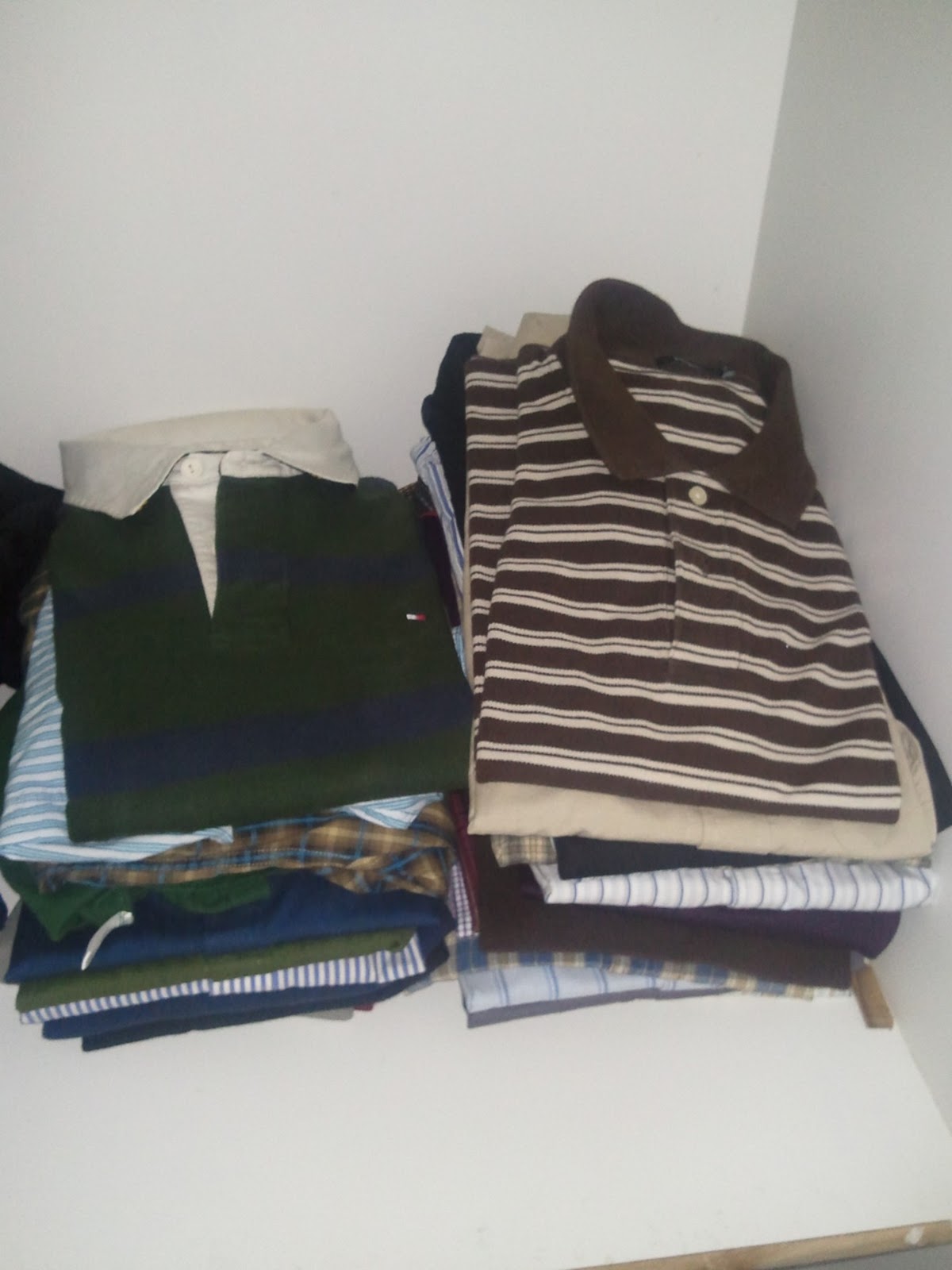
As an engineer, you really don't have to dress up. An old pair of jeans and a few T-shirt works just fine. Add a jacket to cover the cold weather, you can live an entire winter on that  wardrobe.

That also makes me lazy. Being in Seattle and being an engineer, I never spent enough time on my  wardrobe and of course I hate ironing.

So, for the first time ever, I got my entire wardrobe neatly ironed and it looks awesome.


All for 250 Rs, around 5$ :-). I'm set for more than a month.

Thursday, October 13, 2011

Queue-ing


This is nothing new, I guess - queues in India work differently.

I've been spending time in the queues in a few places over the last few weeks (queues in banks, queues to get into parking lot, queues in government offices). It is amusing how folks react in queues.

Firstly, most folks really don;t like the idea of standing in a queue - most of us have that entitlement that queues are for 'others'. The first thing I'm sure most people think about when they see the queue is 'how the heck do I get to the front' - which is where the concept of a queue breaks down.

The queues tend to be compact, compressed and literally, you can have (unwanted) physical contact. There are the perpetual 'jumpers' who find that extra-ordinary excuse to get to the front (more often than that it tends to start with - 'I have a one minute request'). When reminded about the 'jump', some folks give up with a whimper, while the bold ones try to substantiate why they need to be at the start of the queue.

I sometimes feel that somehow people think that just getting as near as possible to the queue counter will help them get the work done faster. It is more of an instinctive reaction to push, hustle and get to the front.

The other annoying is the multi-tasking at the queue counter. Instead of servicing one customer at a time, the people on the other side invariably try to help more than one customer at the same (i.e multi-task) and that really doesn't help.

I just hope that we drill this into our kids - 'stand in line, get your work done and get out as fast as possible, it is just that simple'....

Wednesday, October 12, 2011

Wrong Place...


If there is one place you really don't want to be in, is to be in an ambulance stuck in Bangalore traffic. I have seen few times when an ambulance is trying to maneuver through the Bangalore traffic at peak hours and it is not making any progress. Last week, on the way to the airport, we were driving right behind an ambulance for more than 3 kms at snail pace(with a patient inside). Unfortunately, with all the construction and changes happening, the choices are restricted in terms on how much space a ambulance or any utility vehicle can get. I'm sure there have been a few lives lost because of this.

While construction is a good excuse, I'm sure there are some common-sense things a drivers on the road could do to at-least make sure the ambulance gets a priority on the way to its destination. I'm sure in  few years, we will see heli-lifts to dispatch patients to the emergency care.

Sometimes, I feel that army should be entrusted care of traffic for a a while to just drill discipline  & common-sense into the drivers and instill the fear of the devil if anyone breaks the rule :-). The pot-bellied traffic police manning the road don't really serve any cause.

Sunday, October 9, 2011

Deals..


If you have stayed in the US for a long time, you are tuned to looking out for 'deals'. Deal is any offer which is unusual, obviously gives a big discount and is an event where you look back and feel satisfied that you didn't have to shell out as much money as your friend or neighbour. Thanksgiving sale, X-mas sale or that super saving JC penny sale are examples of these.

The other type of deal is when you get a great price, but you get locked in a contract for an extended period of time - but then you console yourself saying that you got a great 'deal' upfront. For example, we buy that cool phone for 80% off retail (but we are locked in a 2-year contract with that data plan which we don't use). Or we have that Comcast deal where you get 30$ off on your monthly bill, but then need to have subscription for more than a year. Or you can get a Dish installed for free if you have yearly subscription.

The reason I have been mentioning this is that pricing I have seen in India seem to be lot less complex. If you feel like getting rid of your cable connection, you can do that after a month. If you don't like getting tied with a cell phone provider, you can buy pre-paid cards and change when you wish too. If you don't feel good with your broadband connection, just switch without being worried about anything else.

The other thing is buying a car is stress-free as far as price is concerned. The base price for the car is the same everywhere (across all show-rooms). So you don;t the have stress of dealing with a pushy car-salesman, comparing the prices across different show-rooms and then being worried if you are really getting that 'good deal'. You can safely sign that cheque for the car knowing that everyone else is paying the same amount of money.

Of course, the Indian model will change in the long term - but for now, I don't have to worry about those 'deals' :-)

Friday, October 7, 2011

Cars...


As I mentioned here, we are in the market to buy a new car. The car industry is booming out here and the abundance of choices are really confusing for a new customer.

Four important criteria for us :

  1. Mid-size vs Sedan. A sedan is the equivalent of a VW Jetta, Honda City, Hyundai Verna vs a mid-size which is Hyundai I20, VW Polo etc. A mid-size has lesser boot space and lesser leg room in the back-seats. 
  2. Petrol vs Diesel - everyone recommends a diesel engine now-a-days, with the petrol prices increasing. 
  3. Automatic vs Manual - automatic is just making inroads in India and my guess-estimate is that less 10% of the vehicles are automatic.
  4. New vs Second-hand - no one locally recommends a second hand car !
Price of course is a big factor - a car is a dead investment. 10-12 years ago, I would have laughed at this, but you become wiser with age :-).

The traffic on the road and the crawl factor during peak hours makes automatic a big convience. Maneuverability is another concern given the parking woes (see link), a smaller car makes sense . A diesel engine would cost approximately 75,000 more than a petrol engine. My rough calculation says that you recover the initial upfront costs within the first 2800 kms, after which the diesel engine is definitely wins in the cost of the ownership.As for second hand cars, the biggest problem is the trust factor. While in the US, it is easy to detect a lemon, India does not have equivalent rules and regulation to detect vehicles which have been through accidents or any other problems.

So it looks like it is going to be a mid-size, automatic, diesel, first hand car (hopefully) !!

Monday, October 3, 2011

Test Drive


We are in the market to buy a car. One of the pretty neat concepts, at-least for me is that we really dont have to drive down to the car dealership to drive one of the new cars. All you have to do is call them up and one of the salesman will arrive at your door-step and you can drive the car around. And the salesman would also run through the car features and other details. Pretty cool. It saves you time to get down to the dealership and of course it is a hassle-free experience.

The bad side is that if you stay within the city, you really cant get the highway feel for a vehicle.

It amazes me to see the car industry booming given the space constraints. Most people have multiple cars and a large percentage are upgrading to sedans (VW Jetta, Hyundai Verna, Honda City etc). Given that car is not really a good financial investment, it is luxury item (on the balance sheet at least), I'm surprised to see them sell like hot-cakes. The real good cars have a wait time of 4-8 months and you need to plan ahead. If you are like us and looking to buy immediately, the choices go down considerably.

The salesman are paid slightly differently when compared to the US. Each of them have fixed salary approximately 10,000Rs pm and they get 1000Rs for every car they sell. Some of them whom I have been talking do, sell approximately 20-25 cars a month i.e 1 car a day. I guess the average cars sold per salesman is lesser, but still that is a large number of cars ! We better get the roads ready to get this many cars on road.

Of course, second hand cars are not recommended by everyone I'm talking to !

Saturday, October 1, 2011

Phone book explosion ...


As I start settling down in Bangalore, I'm having a tough time maintaining my phone book. Mobile has become a neccessity and a convience tool. Everyone in India now carries a mobile phone (starting from the domestic help, the utility workers, professionals besides friends and families).

Some of my phone book entries look like this :
Murli 'Grill'
Ranga 'Carpenter'
Venu 'Insurance'
Marshall 'Cleaner'
Satya 'Driver'
Kamlamma 'House cleaning'
Aarthi 'School'
Pradeep 'Car Sales'
And so on...

Indian names tend to be common - more often than not, we have to associate context to the names. Also, these entries tend to be short-lived i.e they are only useful to you for a particular period. The current phone book tends to be not-so-useful for these. It would be awesome if I could some how categorize these entries based on some activity.  One way I'm organizi'ng these entries is to use the 'notes' section for each of these phone entries (and that allows adding some context to each name)

Friday, September 30, 2011

Domestic Help..


Very closely related to my last post on cheap labor, TOI Bangalore edition had this editorial piece by Jug Suraiya on domestic help. I'm sure all of us know this problem very well and as the article says, it is a big topic of discussion.

Personally, I like this piece of news :

"    Which of course is great news for India. Because the growing shortage of servants proves, better than any Planning Commission report, that despite all odds the Indian economy is progressing as more and more former domestic helpers get jobs in the organised sector as industrial workers or service providers. "


As I see around me, it is great to see that the children of the 'domestic helps' go to school and get better jobs elsewhere rather than following their parents footsteps. This unlocks greater potential in the country and they can add more to the GDP !!

Of course, this means that we need to start doing our own work soon !

Thursday, September 29, 2011

Cheap Labor...


One of the attractive things about India is the availability of 'cheap labor'. Labor here refers to all blue-collar jobs and cheap because it is easy to find folks who work for less (compared to how much it would cost you in the US). If you have ever tried getting a simple job done in your house in the US, you would understand how costly it is.

While getting the job done is easier and cheaper, it is not necessarily the best work. Typically, these blue collar workers tend to do a patch up job and it works in the short-term and the problem would recur in a short-while. I'm talking about fix a leaky pipe, you get a plumber who does a quick fix for a few hundred rupees, but the problem would recur in a couple of months. Then the cycle repeats.

The other problem is that because labor is cheap, people tend to think that just adding more folk to the work-force would cause things to move faster (think Mythical Man Month problem in software).

As I see more of this blue collar workers, I'm beginning to think that maybe increase in the cost of labor is good for the economy as a whole. The rising costs implies that customers will expect a better quality of service and from the worker point of view, it forces them to work better. Increased costs would also force organizations to think in terms of efficiency and costs.